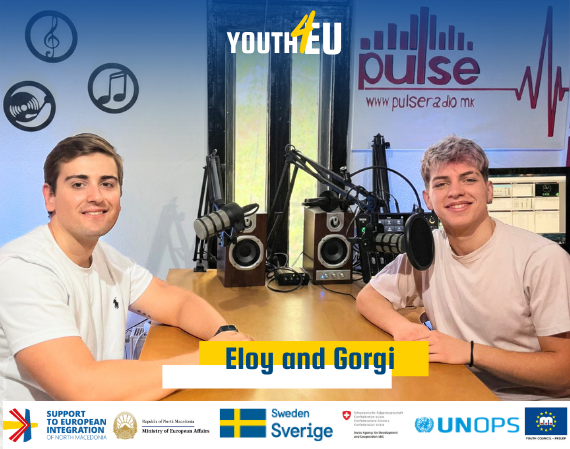
The second episode of the YOUTH4EU podcast explores one of the biggest questions facing young people today: how should artificial intelligence and digital technologies be regulated?
Hosted by Gorgi Runeski, this episode features Eloy Antuna, an ESC volunteer from Spain with experience at the European Parliament, the United Nations and in European security policy. His experience working with European institutions and policy brings a practical perspective to the discussion on how the EU approaches emerging technologies, digital rights and regulation. His background also provides relevant insight into how European institutions develop and implement policies that affect citizens and young people in the digital environment.
The episode introduces the EU AI Act, one of the world’s first comprehensive legal frameworks for artificial intelligence and explores why the European Union decided to regulate AI. Is regulation necessary to protect citizens, or could it slow down technological development and innovation?
The conversation also looks at the Digital Services Act (DSA) and how European rules are designed to make online platforms safer and protect the rights of users, including young people.
What do these regulations mean for young people in North Macedonia? What rights should young people know when using AI-powered platforms and social media? And as AI becomes increasingly important in education and the labor market, should young people be worried about losing jobs — or see AI as an opportunity to develop new skills and explore new careers?
🎧 Listen to Episode 02 on Pulse Radio and Spotify and stay tuned for the next episode of the YOUTH4EU series.
This podcast has been produced with the financial support of Sweden through the “Support to European Integration of North Macedonia” project, implemented by the United Nations Office for Project Services (UNOPS). The content of this podcast is the sole responsibility of Youth Council Prilep and can in no way be taken to reflect the views of Sweden and UNOPS.